
 Simone
bother to do和bother doing有什么区别吗?
的有关信息介绍如下:从释义,用法,使用环境,形象和影响范围五个维度分析bother to do 跟bother doing的区别,详细内容如下。
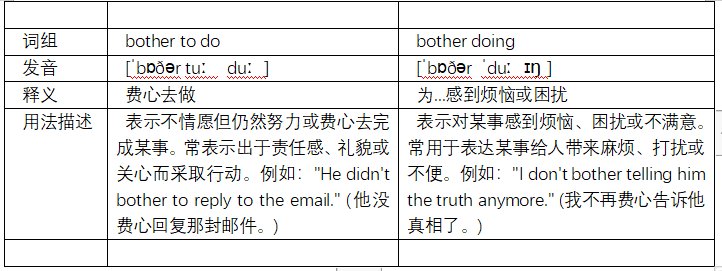
1. 释义区别:
- "Bother to do"指有意愿或动机去做某事,通常暗示付出额外的努力或关注。
例如:"She bothered to invite all her colleagues to the party." (她费心邀请了所有的同事参加派对。)
- "Bother doing"指感到烦恼、困扰或不满,通常指对某事感到不悦或心烦意乱。
例如:"I find it bothersome having to do all the household chores." (我觉得做家务很烦人。)
2. 用法区别:
- "Bother to do"通常用于强调特定的行动或决定,表示愿意作出额外的努力或关注。
例如:"He bothered to research the topic before the meeting." (他在会议前费心研究了这个话题。)
- "Bother doing"通常用于描述一种感受或反应,表示对某事感到烦恼、困扰或不满。
例如:"I don't bother arguing with him anymore." (我不再费心跟他争论了。)
3. 使用环境区别:
- "Bother to do"常用于描述个人的意愿、动机或责任感,表示愿意为了特定目的或结果去付出努力。
例如:"She bothered to learn a new language to advance in her career." (她为了事业发展费心学习了一门新语言。)
- "Bother doing"常用于描述对某种情况、任务或状况的感受,表达对困扰或不满的情绪反应。
例如:"He doesn't bother doing the dishes and leaves them for others." (他懒得洗碗,把碗留给别人。)
4. 形象区别:
- "Bother to do"在形象上强调主动性、努力和关注的行动,可以理解为有意愿或动机去做某事。
例如:"She bothered to wake up early to catch the sunrise." (她起了个大早去看日出,费了些心思。)
- "Bother doing"在形象上强调困扰、不满或心烦意乱的感受,可以理解为感到烦恼或不快。
例如:"The noise from the construction site constantly bothered her while she was trying to work." (施工现场的噪音一直让她在工作时感到烦恼。)
5. 影响范围区别:
- "Bother to do"常用于针对具体行动或决定的个人感受和态度,影响范围相对较窄。
例如:"He only bothers to reply to important emails." (他只费力回复重要的电子邮件。)
- "Bother doing"常用于描述对某种情况或状况的感受,可以适用于更广泛范围的人或事件。
例如:"The constant interruptions bother everyone in the office." (频繁的打扰让办公室里的每个人都感到困扰。)